 Merken
 There's something about the smell of white wine hitting hot garlic that makes you stop whatever you're doing and pay attention. I learned that standing in my friend Marc's kitchen in Bruges on a rainy October evening, watching him move around the stove with the kind of ease that only comes from making the same dish a hundred times. He didn't consult a single recipe, just opened a bag of mussels, shook them into a pot, and somehow turned fifteen minutes into a dinner that felt like it had been simmering all day.
I made this for four friends last spring when we all needed a reason to gather around a table without pretending it was a special occasion. Someone brought wine, someone brought bread, and I brought the mussels and the memory of that Bruges kitchen. By the time the pot came to the table steaming and loud with the sound of those shells clicking against each other, nobody was checking their phone anymore.
Ingredients
- Fresh live mussels, 2 kg (4.4 lbs): Buy them the same day you cook if possible; they should feel heavy and smell like the ocean, never fishy or off. Scrub under cold water and pull off the stringy beard—it comes away easier than you'd expect.
- Shallots, 2 medium: Finely chopped shallots dissolve into the broth and taste sweeter than onions, which is the whole point of using them here.
- Garlic, 2 cloves: Minced small so it releases quickly into the hot oil and becomes sweet instead of harsh.
- Leek, white part only, 1 small: The white part is milder and more delicate than the green; slice it thin so it softens in seconds.
- Celery, 2 stalks: Chopped fine, it adds a whisper of earthiness that nobody will identify but everyone will taste.
- Fresh flat-leaf parsley, 1 small bunch: Added at the very end so it stays bright and alive; dried parsley won't give you the same alive feeling.
- Fresh thyme and bay leaf: These two go in early and steep into the wine, building flavor layers without ever tasting like herbs are trying too hard.
- Dry white wine, 300 ml (1 1/4 cups): Use something you'd drink; the cheap stuff tastes like cheap stuff, and it's only going to get more concentrated in the pot.
- Olive oil, 2 tbsp: Enough to coat the pan and soften the vegetables without making everything greasy.
- Black pepper and sea salt: The mussels themselves are salty from living in the ocean, so taste before you season; you might not need salt at all.
- Lemon wedges: Squeeze them over everything; they wake up the broth and cut through the richness.
Tired of Takeout? 🥡
Get 10 meals you can make faster than delivery arrives. Seriously.
One email. No spam. Unsubscribe anytime.
Instructions
- Rinse and check the mussels:
- Run them under cold water while scrubbing gently with your fingers or a brush, pulling off any stringy beards that stick out. Discard any that are already open or have cracked shells, and tap closed ones with your knife handle—if they don't snap shut, they're done and need to go in the bin. This takes two minutes and is the most important step because you're starting with living creatures that deserve respect.
- Build the aromatic base:
- Heat the olive oil in a large pot over medium heat until it shimmers, then add shallots, garlic, leek, and celery all at once. Stir constantly for three to four minutes, letting the vegetables soften and fill the kitchen with a smell so good you'll want to bottle it. Your eyes should water slightly from the garlic; that's how you know it's working.
- Add herbs and wine:
- Scatter the thyme sprigs and bay leaf over the vegetables, then pour in the white wine all at once. The sizzle and steam that rises will smell like a Michelin-star restaurant, and you haven't even gotten to the mussels yet. Let it come to a gentle simmer—not a rolling boil, just small bubbles breaking the surface.
- Steam the mussels:
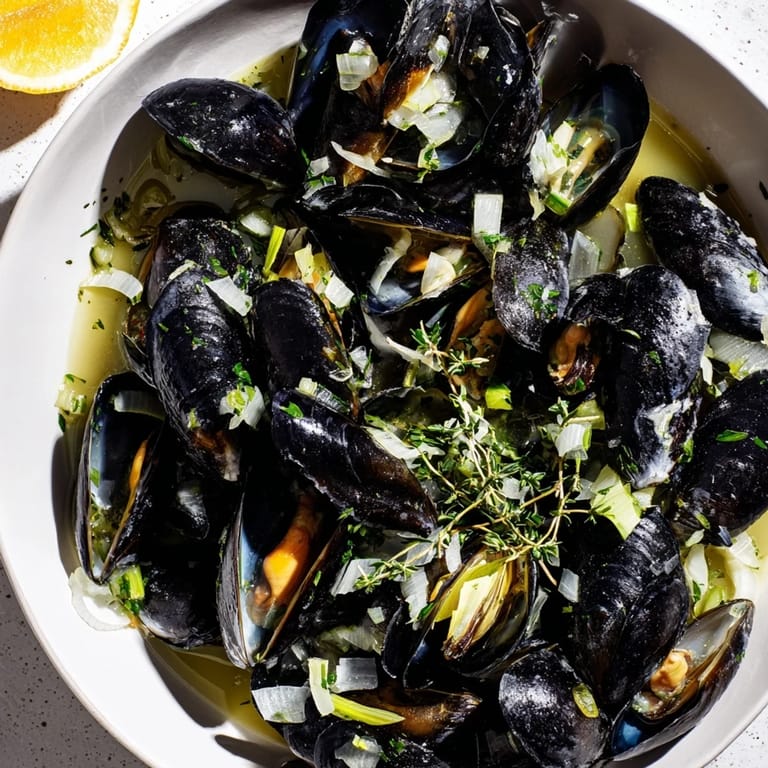
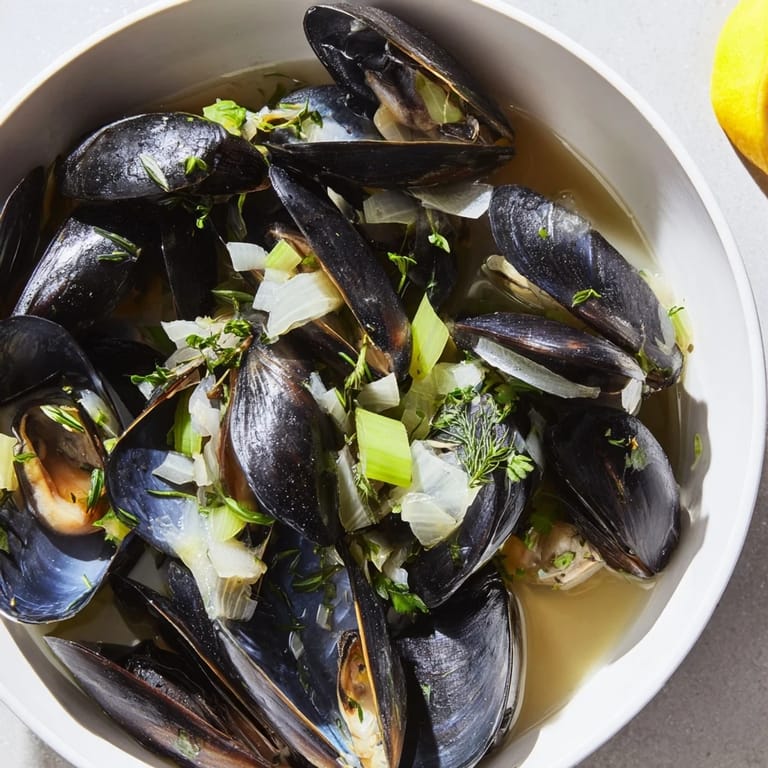
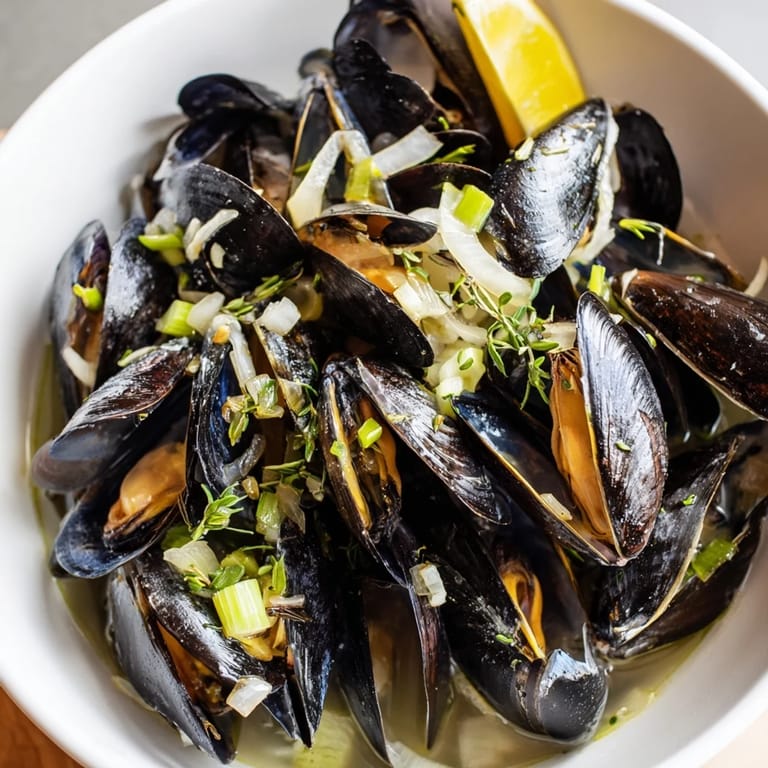
- Pour all the cleaned mussels into the pot in one confident motion, cover with a lid, and immediately crank the heat to high. You'll hear them shifting and clicking against each other inside the pot, which is the sound of them starting to open. After about five to seven minutes, lift the lid and peer in—they should have opened like tiny gifts, their shells spread wide and glistening.
- Finish and serve:
- Pick the pot off the heat, stir in the chopped parsley, and taste the broth. Add black pepper freely, then taste for salt—remember, the mussels have already given the broth brininess, so go slow. Squeeze some lemon into the pot, stir once, and immediately ladle into deep bowls with plenty of broth, scattering any leftover parsley on top.
 Merken
 The moment that stuck with me wasn't actually eating the mussels that spring evening—it was watching my friend Jonas tear apart his bread to soak up every trace of broth, eyes closed, completely lost in the taste. That's when I understood that this simple dish had crossed over from food into experience.
Why This Dish Works
Moules marinière succeeds because nothing is fighting for attention. The wine doesn't overpower the mussels; the garlic doesn't shout; the herbs know when to step back. It's like a conversation where everyone gets to speak but nobody interrupts. The broth becomes the stage where all those flavors meet and mingle, and by the time you're fishing out the last mussel, you're essentially drinking distilled ocean with a white wine chaser.
The Bread Question
Crusty bread is non-negotiable here, but not because you need something to eat alongside the mussels—you need something to rescue the broth. Pinch off chunks and use them to push the mussel meat out of the shell, then soak the bread in everything that's left behind. Some people call this mopping; I call it the best part of eating. If you want to go fully Belgian and traditional, serve it with hot, salted fries and homemade mayonnaise instead, which is its own kind of magic.
Beyond the Basics
Once you've made this a few times and it feels like second nature, start experimenting with small additions. A splash of cream at the very end turns the broth into velvet, though it's not traditional and Marc would probably shake his head at me. A pinch of saffron whispers through everything. Some people add a spoonful of Dijon mustard, which sounds wrong until you taste it. The foundation is strong enough to support these flights of fancy, and you'll find what makes your version feel like home.
- Save the leftover broth—it freezes beautifully and becomes the foundation for seafood soups or rice dishes weeks later.
- If mussels ever feel intimidating, remember that they're impossible to overcook as long as the lid stays on and the heat stays high; they'll just open more and taste equally delicious.
- The best meals feel effortless, and this one absolutely can be if you prep your vegetables ahead of time and just assemble everything when people arrive at your door.
 Merken
 This dish taught me that the best cooking happens when you stop overthinking and start trusting the ingredients to speak for themselves. Serve it hot, serve it generous, and watch what happens when people taste something that simple and honest.
Antworten auf häufige Fragen
- → Wie reinige ich die Miesmuscheln richtig?
Spüle die Muscheln unter kaltem Wasser und entferne die Bartfäden. Verwerfe geöffnete oder beschädigte Muscheln.
- → Welche Kräuter passen zum Dämpfen der Muscheln?
Thymian, Lorbeerblatt und Petersilie verleihen dem Gericht eine frische, aromatische Note.
- → Wie lange sollten die Muscheln gedämpft werden?
Etwa 5 bis 7 Minuten, bis alle Muscheln sich geöffnet haben.
- → Kann ich den Sud variieren?
Ja, ein wenig Butter sorgt für mehr Cremigkeit, und zusätzliches Gemüse wie Lauch und Sellerie bereichert den Geschmack.
- → Wie serviere ich die Muscheln am besten?
Mit Zitronenspalten, frischem Brot oder klassischen belgischen Pommes für ein rundes Geschmackserlebnis.