 Merken
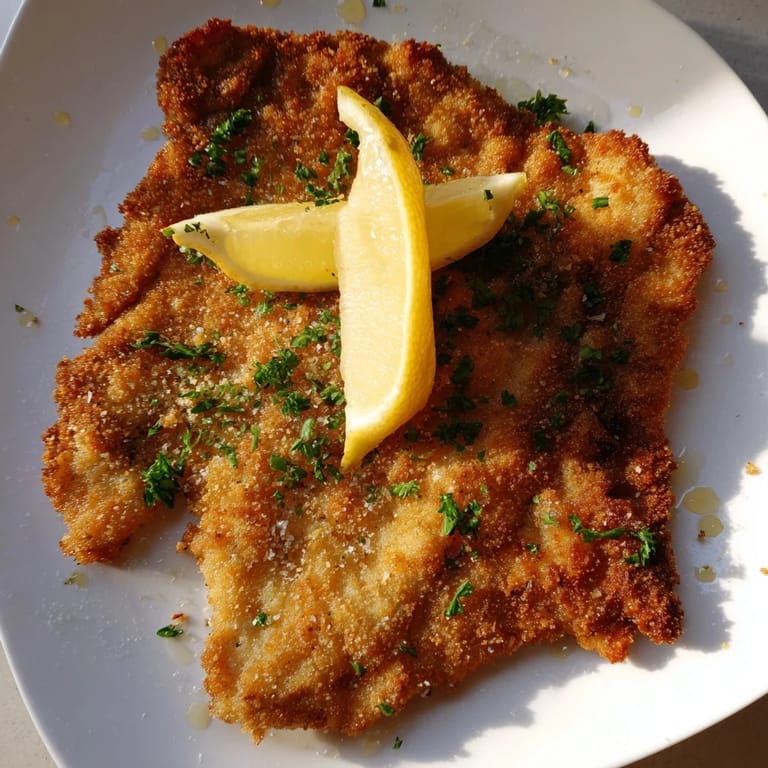
 The first time I truly understood what made a Wiener Schnitzel special, I was standing in a small kitchen in Vienna, watching an elderly woman work with just four ingredients and absolute confidence. She moved through each step without hesitation, and when that golden cutlet hit the plate with a crisp snap that echoed through the kitchen, I realized this wasn't about fancy technique—it was about respecting the simplicity and getting every detail right. That sound, that golden crust, the way the meat stayed impossibly tender inside—I've been chasing that perfection ever since.
I made this for my partner on a random Tuesday, and they actually set down their phone mid-meal—something that never happens. The crust stayed crispy even as it cooled, and we sat there talking longer than we usually do, passing lemon wedges back and forth, both of us surprised by how something so simple could feel so complete.
Ingredients
- Veal cutlets (4, about 150 g each): Pound them thin and even so they cook uniformly and stay tender; this is what separates a proper Schnitzel from a tough, rubbery cutlet.
- All-purpose flour (100 g): The first layer that helps the egg stick and creates structure for the final crust.
- Eggs (2 large) and milk (4 tbsp): This mixture is your glue—beaten together, it binds the breadcrumbs and keeps them from falling off in the pan.
- Fine dry breadcrumbs (150 g): Use panko or finely ground breadcrumbs, never fresh ones; dry crumbs fry up golden and stay crisp.
- Clarified butter or neutral oil (250 ml): This is not the place to skimp—you need enough fat for the meat to essentially swim, or you'll end up with a greasy coating instead of a crispy crust.
- Lemon wedges and fresh parsley: The brightness cuts through the richness and makes each bite feel lighter than it actually is.
Tired of Takeout? 🥡
Get 10 meals you can make faster than delivery arrives. Seriously.
One email. No spam. Unsubscribe anytime.
Instructions
- Pound the veal gently:
- Place each cutlet between plastic wrap and use steady, even strokes with a meat mallet to reach about 1/4 inch thickness. Pat dry thoroughly with paper towels—moisture is the enemy of crispiness—and season both sides lightly with salt and pepper.
- Set up your breading station:
- Arrange three shallow dishes in a line: flour, then the egg-milk mixture, then breadcrumbs. This assembly-line approach keeps things clean and makes you move faster.
- Bread each cutlet with a light hand:
- Dredge in flour, shake off the excess until almost no powder clings. Dip into egg, let it drip for a second, then lay it on the breadcrumbs and coat both sides gently—pressing pushes out air pockets and makes the crust dense instead of airy and crisp.
- Heat your fat until it shimmers:
- Place your skillet over medium-high heat and watch the surface shimmer before you add the first cutlet. You'll hear a gentle sizzle when it hits the pan; that's exactly what you want.
- Fry until golden on both sides:
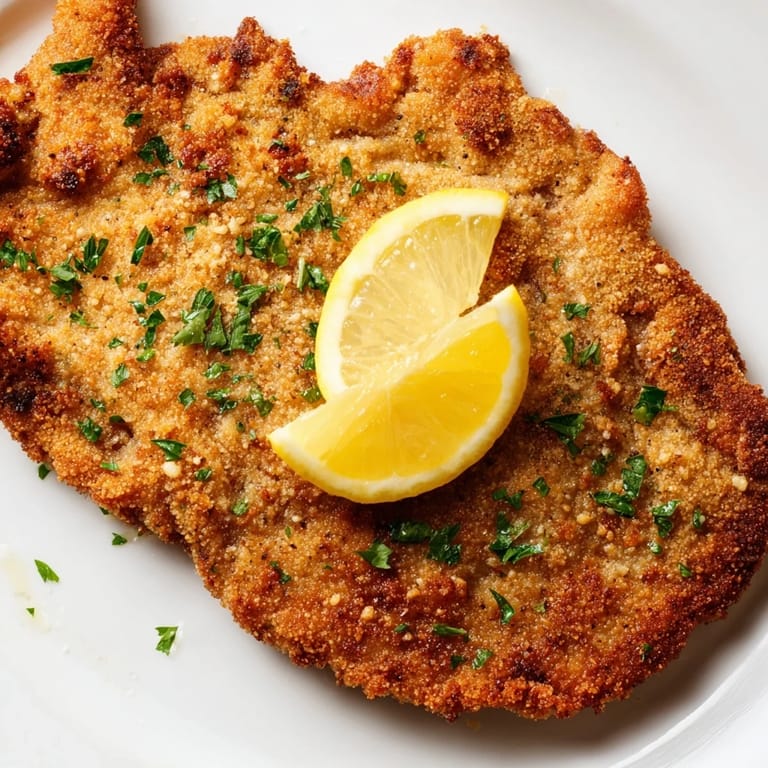
- Cook for 2–3 minutes per side, tilting the pan occasionally and spooning hot fat over the top so the crust browning stays even. Remove with a slotted spatula and drain on paper towels for just a moment before serving.
 Merken
 There's a moment right after you lift that golden Schnitzel from the pan, still crackling slightly as the butter cools, when you understand why this dish has been served in Vienna for over a century. It's not nostalgia or tradition for tradition's sake—it's simply that this method creates something almost impossible to improve.
Why Pounding Matters More Than You Think
The pounding isn't just about making the meat thinner; it's about making it even. Thick spots cook slowly and stay tough while thin edges overcook and dry out. A properly pounded cutlet cooks in the exact same time all the way through, which is why that veal stays so tender and juicy under the crust. This is one of those details that seems small until you taste the difference.
The Science of the Crust
That golden, crispy exterior isn't just about heat—it's about the fat. When you fry in clarified butter or high-heat oil, the moisture in the breadcrumbs steams out, leaving behind pockets of air. Those pockets are what make the crust shatter when you cut into it. If you use too little fat or let the oil cool down, you end up with a dense, oily coating instead. The Viennese understood this centuries ago, which is why they were never subtle about the amount of butter in the pan.
Serving and Pairing
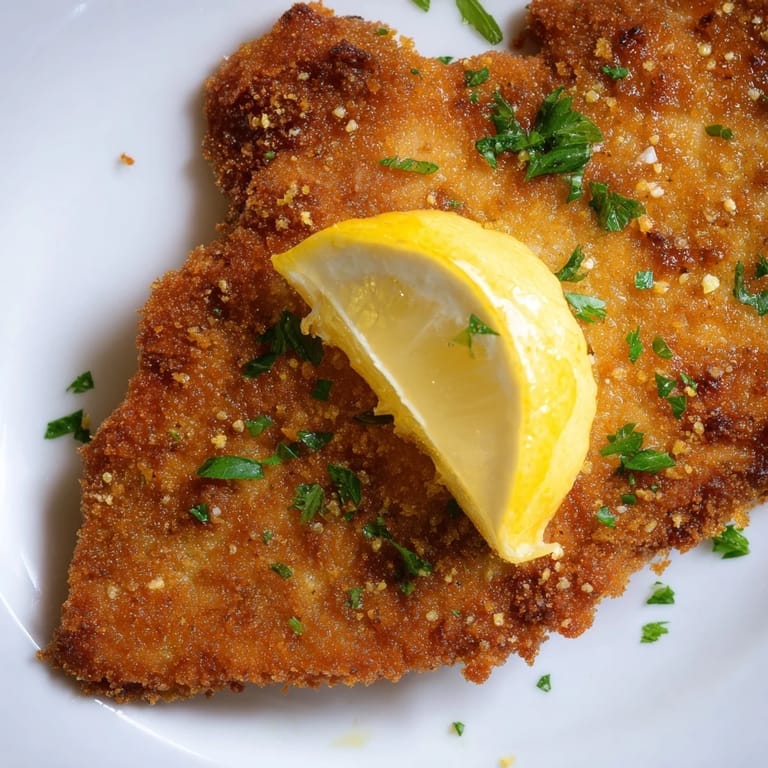
Traditionally, Schnitzel arrives at the table with a wedge of lemon and nothing more, though potato salad, cucumber salad, or even lingonberry jam appear alongside it in Vienna. The lemon is essential—a squeeze of bright acid over the rich, buttery crust wakes up every bite. If you're cooking this for someone, get good lemon and fresh parsley; small details like this tell the story of care in the kitchen.
- Serve immediately while the crust is still crackling; this dish doesn't wait well.
- If you're feeding a crowd, keep finished schnitzels warm in a low oven while you fry the rest, but don't cover them or they'll steam and lose their crispness.
- Remember that true Viennese Schnitzel is made only with veal; pork or chicken variants are technically called Schnitzel Wiener Art.
 Merken
 This is the kind of dish that reminds you why cooking matters—not because it's complicated, but because when you get it right, something simple becomes perfect. Make it once, and you'll understand why people have been asking for this recipe in Vienna for generations.
Antworten auf häufige Fragen
- → Wie erhält das Schnitzel eine besonders knusprige Panade?
Die Semmelbrösel sollten locker aufgetragen werden, ohne sie festzudrücken. Zudem sorgt das Braten in heißem Butterschmalz für eine gleichmäßige, knusprige Kruste.
- → Warum wird das Kalbfleisch vor dem Panieren geklopft?
Das Klopfen macht das Fleisch dünn und zart, was für die typische zarte Textur und schnelle Garzeit sorgt.
- → Welche Beilagen passen traditionell zum Wiener Schnitzel?
Klassisch werden Kartoffelsalat, Gurkensalat oder Preiselbeermarmelade gereicht, um den Geschmack perfekt zu ergänzen.
- → Was ist die beste Fettquelle zum Braten des Schnitzels?
Butterschmalz ist ideal, da es hohen Temperaturen standhält und einen feinen Geschmack verleiht. Alternativ eignet sich auch neutrales Öl mit hohem Rauchpunkt.
- → Wie sorgt man für gleichmäßige Bräunung beim Schnitzel?
Während des Bratens wird das Fett auf die Oberseite des Schnitzels übergossen, so wird die Panade rundum gleichmäßig braun und knusprig.