 Merken
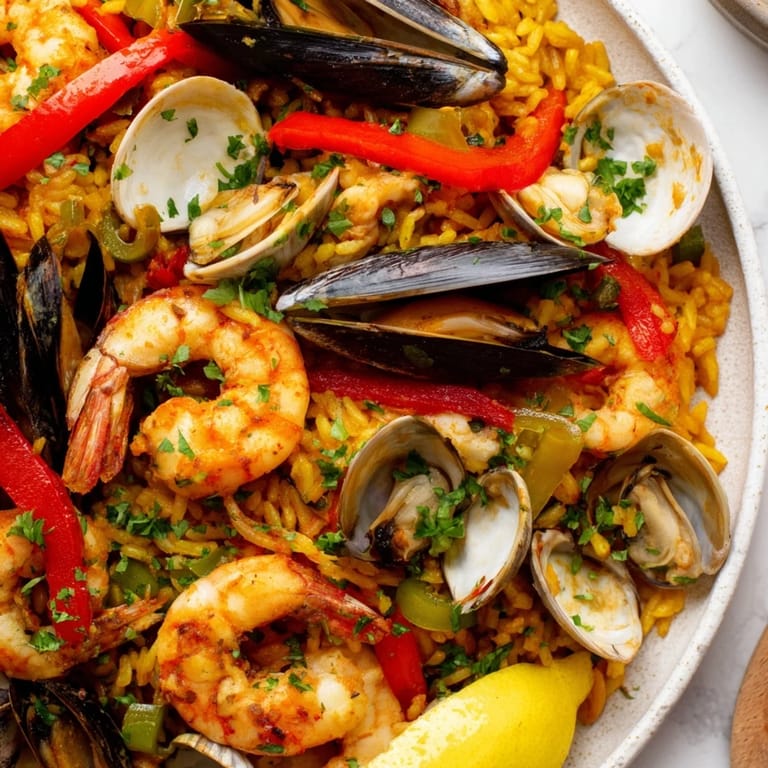
 The first time I made paella, I was standing in a tiny Barcelona kitchen borrowed from a friend, and the aroma of saffron hit me like a warm embrace the moment those golden threads touched the stock. My hands were trembling slightly—not from nerves, but from the electricity of finally understanding why people spoke about this dish with such reverence. The seafood scattered across the rice looked almost too beautiful to disturb, and when the first guest lifted a mussel to their lips, I knew I'd discovered something that would stay with me forever.
I made this paella last summer for my sister's birthday, and halfway through cooking, my nephew wandered into the kitchen asking what smelled so good. By the time we sat down to eat, he'd forgotten all about wanting takeout pizza—he was too mesmerized by the theatrical moment of opening those mussels and clams, watching the steam rise. That's when I realized paella isn't just dinner; it's a small ceremony that brings people together.
Ingredients
- Shrimp, mussels, and clams: Buy them the day of cooking if you can, and inspect each shellfish carefully—any that feel oddly light or don't close when tapped should go straight into the discard pile.
- Short-grain paella rice (Bomba or Arborio): These varieties have the perfect starch balance to absorb flavor while staying distinct, unlike long-grain rice which turns to mush.
- Saffron threads: This is where your money should go—real saffron creates that distinctive golden color and subtle floral note that makes paella unmistakably itself.
- Fish or seafood stock: Homemade is best, but a quality store-bought version will do; just taste it before adding to ensure it's not overly salty.
- Smoked paprika: The smoky warmth ties everything together, so don't skip it or substitute it with regular paprika.
- Bell peppers: The red and green create visual contrast, and their natural sweetness balances the briny seafood beautifully.
- Olive oil: Use a good quality one—it's a foundational flavor here, not just cooking medium.
Tired of Takeout? 🥡
Get 10 meals you can make faster than delivery arrives. Seriously.
One email. No spam. Unsubscribe anytime.
Instructions
- Warm the stock and steep the saffron:
- Pour your fish stock into a saucepan and crumble those saffron threads right in, letting them steep over low heat. You'll watch the liquid transform into liquid gold while you prep everything else—this quiet step is where the magic begins.
- Build the flavor base:
- Heat olive oil in your paella pan and soften the onion until it turns translucent and sweet. Add garlic just as it starts to brown, then immediately add the bell peppers, stirring occasionally until they soften—you'll smell when they're ready.
- Layer in the vegetables and rice:
- Once the peppers are tender, add your grated tomato and let it cook down until the raw edge softens and most of the liquid vanishes. This concentrates the flavor into something deeper than you'd expect.
- Toast the rice:
- Pour in the rice and stir constantly for about a minute, coating every grain in the oil and vegetables. Sprinkle the smoked paprika, salt, and pepper here—the brief toasting changes the texture and helps each grain cook distinctly.
- Add the stock and create the magic:
- Pour in that golden, saffron-infused stock, distributing the rice evenly across the pan. From this moment forward, resist every urge to stir—this is the hardest part, but it's what creates the crispy, slightly caramelized bottom layer (called the socarrat) that makes people close their eyes.
- Arrange the seafood and finish cooking:
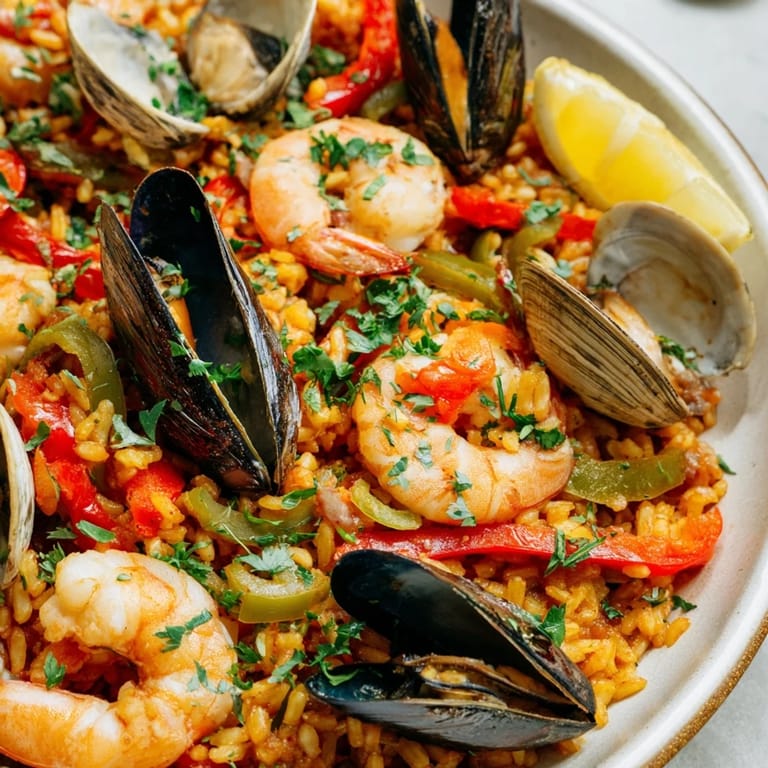
- Place your shrimp, mussels, and clams artfully across the top of the rice, nestling them in slightly so they cook through. Cover loosely with foil or a lid and let everything cook over medium-low heat for 20–25 minutes—the rice will absorb the stock while the shellfish steams gently above it.
- Rest and garnish:
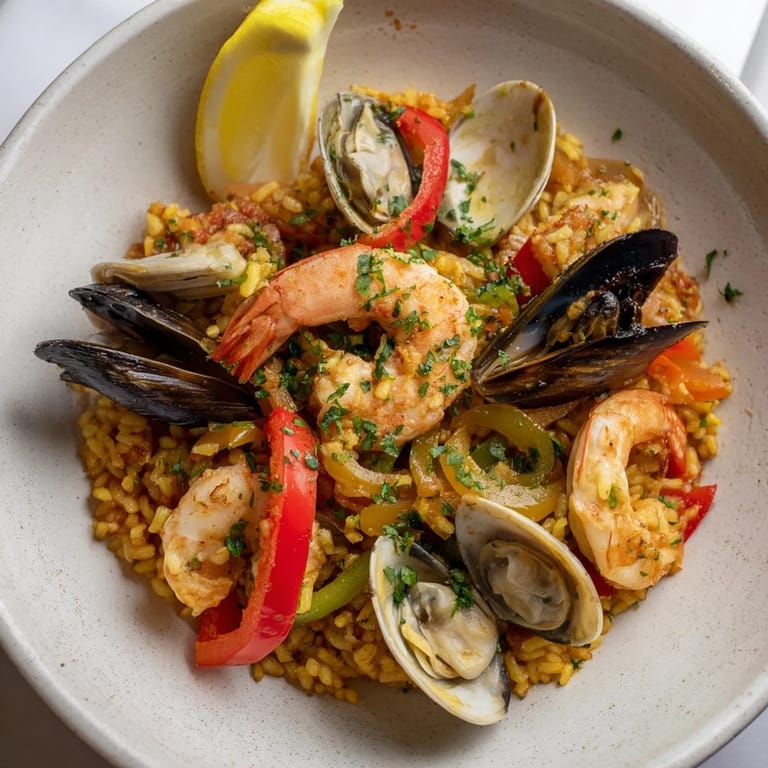
- Once the rice is tender and the shellfish have opened their shells like small gifts, remove the pan from heat and let it rest covered for five minutes. This allows residual heat to finish cooking and the flavors to settle into harmony.
 Merken
 Last spring, I stood over my paella pan at exactly the twenty-minute mark, my heart racing because I couldn't tell if the rice was done or if I'd somehow ruined everything. When I lifted the foil and saw those mussels gaping open like tiny miracles, and felt the gentle resistance of properly cooked rice beneath my spoon, I understood why my grandmother had spent forty years perfecting this dish. It wasn't about impressing people—it was about the honest satisfaction of feeding yourself and others something that tastes like gratitude.
The Soul of Saffron
Saffron is the heartbeat of paella, and treating it with intention transforms the entire dish. I've learned that steeping it in warm stock coaxes out its full flavor spectrum—the floral notes, the subtle earthiness, the visual drama of that golden hue spreading through the liquid. It's expensive for a reason, and respecting that ingredient means using enough to make a difference, not so little that you're just adding color.
The Seafood Selection
The beauty of paella is its flexibility with seafood, but quality matters more than variety. Fresh shrimp should smell briny and sweet, never fishy or ammonia-like, and shellfish should feel heavy for their size and close instantly when touched. I've made this with scallops instead of clams, with squid rings alongside the traditional trio, and even added white fish when I wanted to stretch the dish further. What matters is starting with ingredients you'd actually want to eat on their own.
Creating the Perfect Socarrat
The slightly crispy, caramelized rice at the bottom of the pan—the socarrat—is what elevates paella from merely good to genuinely memorable. You achieve this by not stirring after the stock goes in and by maintaining steady medium-low heat so the bottom makes contact with the hot pan without burning. In the last minute or two, you might even increase the heat slightly to encourage that golden crust, listening for a gentle crackling sound. It should smell nutty and toasted, never acrid or blackened.
- Keep the heat consistent throughout cooking—too high and your rice burns while staying crunchy inside, too low and it steams instead of developing that crucial texture.
- The cover should be loose enough that steam can escape but tight enough that the cooking environment stays humid and balanced.
- Trust your nose; the moment you smell that nutty toastiness, you're in the window for perfect socarrat.
 Merken
 Make this paella when you want to slow down and say something without words, when you want your kitchen to smell like gratitude, and when you're ready to discover why this dish has survived centuries of cooking trends. It's simpler than you think and more rewarding than you expect.
Antworten auf häufige Fragen
- → Wie wird der Safran am besten genutzt?
Safranfäden werden im warmen Fischfond eingeweicht, um ihre Aromen optimal auf den Reis zu übertragen.
- → Welche Meeresfrüchte eignen sich für dieses Gericht?
Garnelen, Muscheln und Venusmuscheln sind ideal, können aber je nach Verfügbarkeit ergänzt oder ausgetauscht werden.
- → Wie vermeide ich, dass der Reis matschig wird?
Den Reis nach dem Einrühren nicht umrühren und die Flüssigkeit gleichmäßig verteilen, um eine goldene Schicht zu erzeugen.
- → Kann ich gefrorene Meeresfrüchte verwenden?
Gefrorene Meeresfrüchte sollten gut aufgetaut und trocken getupft werden, um optimale Ergebnisse zu erzielen.
- → Wie lange sollte die Paella ruhen?
Nach dem Garen sollte die Paella etwa 5 Minuten abgedeckt ruhen, damit sich die Aromen verbinden.