 Merken
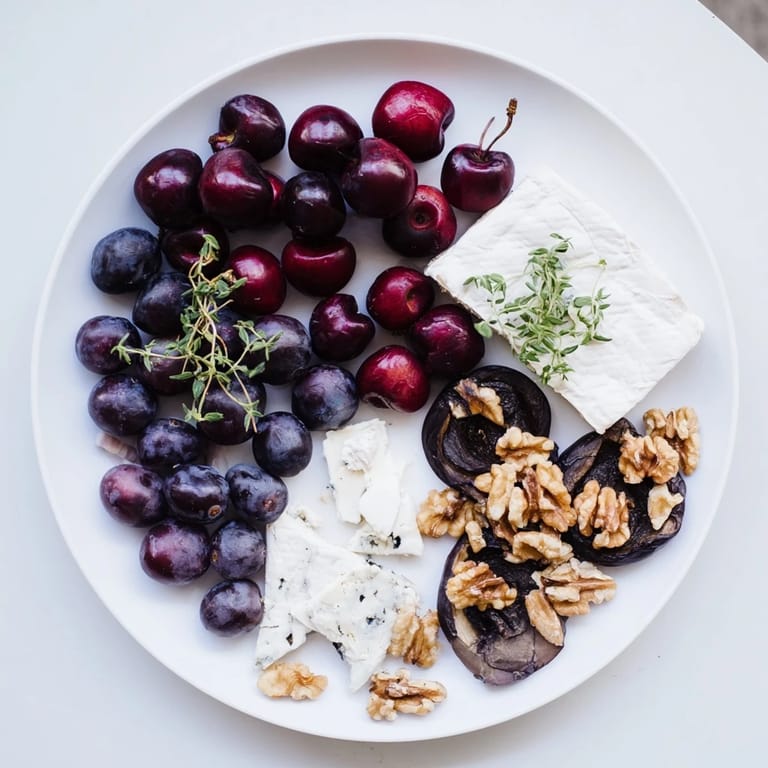
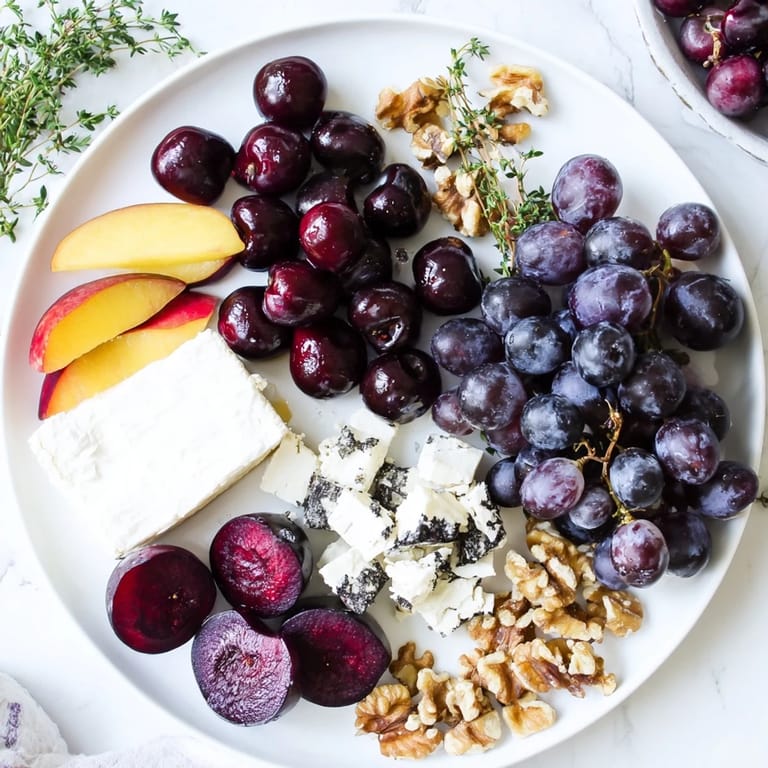
 An evening arrived when I realized I'd been overthinking appetizers—loading my kitchen with elaborate techniques when what actually stops a dinner party mid-conversation is something this simple: dark fruit, creamy cheese, and the way candlelight catches purple grapes. The Midnight Orchard came together in fifteen minutes, and somehow it felt less like assembly and more like I'd arranged something that was always meant to exist on that platter.
I made this for a small dinner where someone mentioned they were tired of the usual cheese board, and I somehow understood exactly what they meant—they wanted surprise, but not fuss. Watching people pause before trying the combination of cherry and goat cheese, then their eyes light up, reminded me that restraint in cooking often reads as confidence.
Ingredients
- Dark cherries, 1 cup pitted and halved: They provide tartness and jewel-like color; pit them yourself if you can because pre-pitted ones sometimes lose their snap.
- Ripe plums, 2 sliced into wedges: The slight firmness of a plum that yields just slightly when you press it is what you want—too soft and they blur together on the platter.
- Purple grapes, 1 cup halved: Halving them keeps them from rolling and exposes their flesh, which looks more deliberate and catches light beautifully.
- Black-ashed goat cheese, 200 g sliced or crumbled: This specific cheese brings earthy, mineral notes; if you can't find it, a fresh goat cheese with edible ash applied works equally well.
- Toasted walnuts, 2 tbsp optional: Toast them yourself for at least five minutes until fragrant, otherwise they taste like the package they came in.
- Honey, 1 tbsp optional: Use it sparingly—it's there to deepen flavor, not to make this dessert.
- Fresh thyme sprigs for decoration: The green matters as much as the taste; it breaks up the purple-and-white color story.
Tired of Takeout? 🥡
Get 10 meals you can make faster than delivery arrives. Seriously.
One email. No spam. Unsubscribe anytime.
Instructions
- Arrange the fruit in groups:
- Set down your platter and think of it as three territories—one for cherries, one for plums, one for grapes. Grouping them creates visual rhythm and lets people know what they're reaching for without confusion.
- Position the cheese thoughtfully:
- Don't scatter it. Place clusters of cheese so they sit in the gaps between fruit groups, creating conversation between the elements on the platter.
- Add the finishing touches:
- Scatter walnuts across the platter in a way that looks accidental, then drizzle honey in very thin streams—it pools beautifully and catches light. Tuck thyme sprigs around the edges.
- Serve straight away:
- This is meant to be eaten while everything is at its coldest and crispest. Set it down and step back; the best thing about this platter is that people navigate it themselves.
 Merken
 This platter became the thing people asked about after dinner, not because it was difficult, but because it felt like someone had actually thought about their experience. That's when I understood that hospitality sometimes has nothing to do with how many hours you spend cooking.
Pairing Suggestions That Make Sense
A dry sparkling wine cuts through the richness of the cheese while echoing the tartness of the fruit—they're almost made for each other. If you're reaching for red wine, something light-bodied and slightly cool won't overpower the delicate flavors on the platter. Honestly, even a crisp white works if that's what your guests prefer, and the beauty of this dish is that it doesn't demand a specific drink; it simply enhances whatever you pour.
Building on the Basics
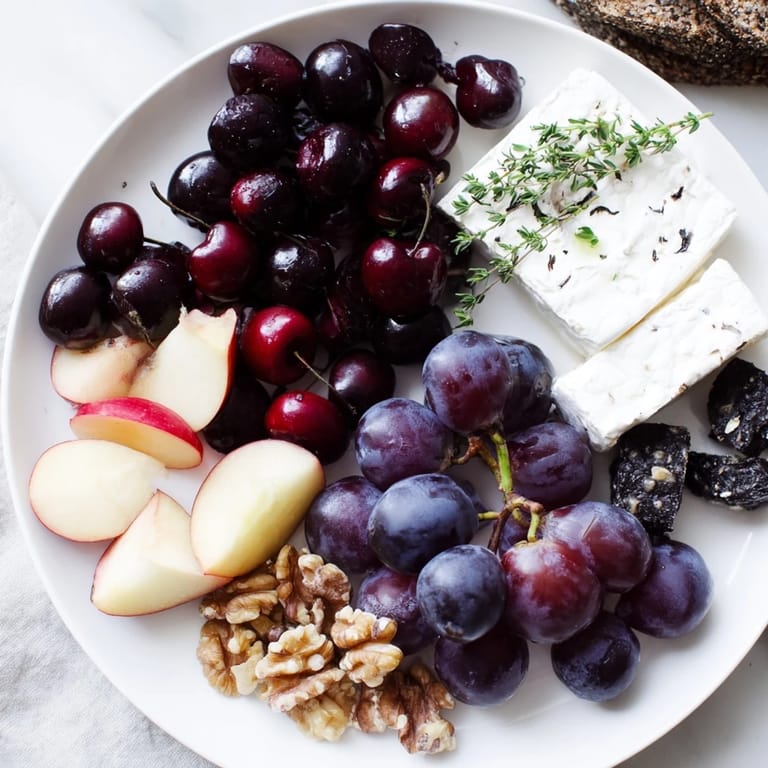
Once you understand this simple structure, it becomes a template. You can swap plums for figs when they're in season, replace grapes with blackberries, or use a different ash-coated cheese if that's what your market offers. The principle stays the same: contrast, color, and enough negative space on the platter that each element feels intentional rather than crowded.
Small Details That Shift Everything
The texture of the cheese matters—if you slice it thinly, it becomes almost delicate, but crumbling it gives a different visual and lets people grab what they want. The thyme isn't just decoration; its slight bitterness and green color push back against the sweetness of the fruit and break up the purple monotony. Toasted walnuts add crunch, but only if you actually toast them and don't just open a bag—there's no shortcut here that doesn't show.
- Chill everything except the honey, which drizzles better at room temperature.
- Assemble no more than thirty minutes before serving, or the fruit will begin to weep juice onto the platter.
- Trust your eye more than any instruction; if it looks beautiful to you, it probably tastes better too.
 Merken
 This dish taught me that simplicity in cooking isn't about lack of effort—it's about knowing where to put your effort and where to let the ingredients speak for themselves. Fifteen minutes, and you've given people something they'll remember.
Antworten auf häufige Fragen
- → Welche Früchte eignen sich für den Teller?
Dunkle Kirschen, reife Pflaumen und lila Trauben bringen eine harmonische Mischung aus Süße und Frische.
- → Kann der Ziegenkäse ersetzt werden?
Ja, für eine vegane Variante eignet sich ein pflanzlicher, schwarzgeäschter Käseersatz.
- → Wie kann der Teller serviert werden?
Am besten sofort angerichtet, so können Gäste selbst kombinieren und den vollen Geschmack genießen.
- → Welche Beilagen passen dazu?
Getoastetes Baguette oder glutenfreie Cracker ergänzen die Texturen und runden das Erlebnis ab.
- → Wie beeinflusst Honig den Geschmack?
Ein leichter Honigtropfen sorgt für angenehme Süße und harmoniert gut mit dem Käse und den Früchten.