 Merken
 I stumbled onto egg muffins during a rushed Tuesday morning when I'd overslept and had nothing but eggs and wilting vegetables in my fridge. Instead of tossing them, I threw everything into a muffin tin, baked them in a panic, and found myself with twelve perfect little pockets of protein that made the next week infinitely easier. Now I make a batch every Sunday, and they've become my secret weapon for staying on track without thinking about breakfast.
I remember bringing a batch to a camping trip, pulling one out cold from a cooler, and watching my sister actually ask for the recipe instead of raiding the pastries. That moment stuck with me—realizing that something so simple could outshine typical breakfast nostalgia.
Ingredients
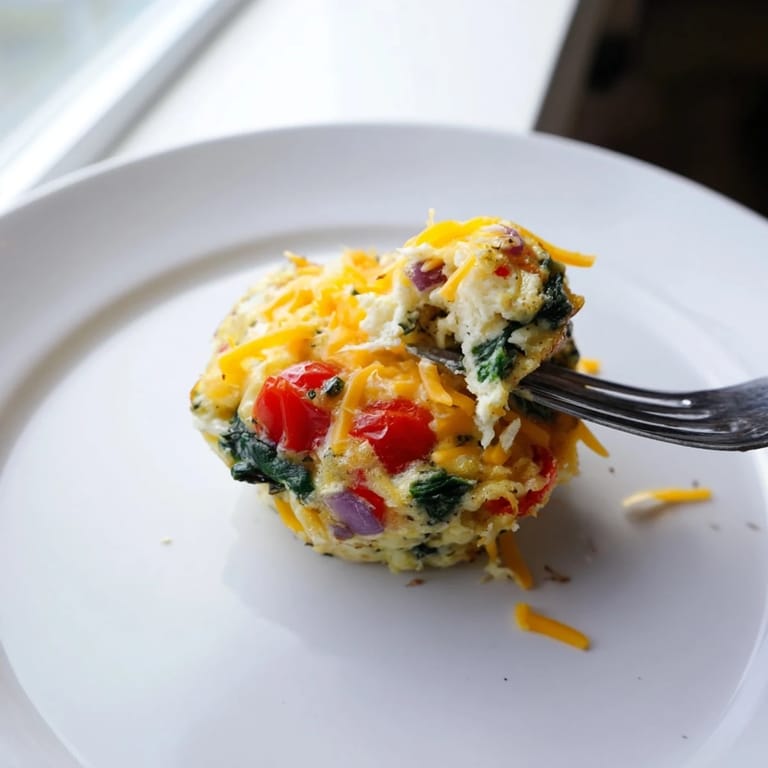
- Baby spinach: It wilts down more than you'd think, so don't be shy with the cup measure—those greens disappear into the eggs and boost nutrition without any bitter aftertaste.
- Red bell pepper: The sweetness cuts through the savory eggs beautifully, and dicing it small means every bite gets a little.
- Cherry tomatoes: Quarter them so they stay tender; whole ones can turn watery and separate from the eggs.
- Red onion: Finely diced, it adds a subtle sharpness that makes the whole thing taste more intentional.
- Large eggs: Use the freshest you can find—they whisk smoother and set with a better texture.
- Milk: Just a quarter cup keeps things from drying out; skip it or reduce it if your vegetables are particularly watery.
- Cheddar cheese: Sharp cheddar melts beautifully and adds depth; feta works too if you want something tangier.
- Garlic powder and oregano: These two seasonings do more work than you'd expect, bringing warmth and a Mediterranean-ish vibe without fresh ingredients.
Tired of Takeout? 🥡
Get 10 meals you can make faster than delivery arrives. Seriously.
One email. No spam. Unsubscribe anytime.
Instructions
- Heat your oven and prep the tin:
- Set the oven to 350°F and grease your muffin tin well—or use silicone cups, which make removal effortless and feel almost like cheating.
- Whisk the base:
- Combine eggs, milk, salt, pepper, garlic powder, and oregano in a large bowl, whisking until the mixture is uniform and pale yellow. This is where you're building the custard that holds everything together.
- Fold in the vegetables and cheese:
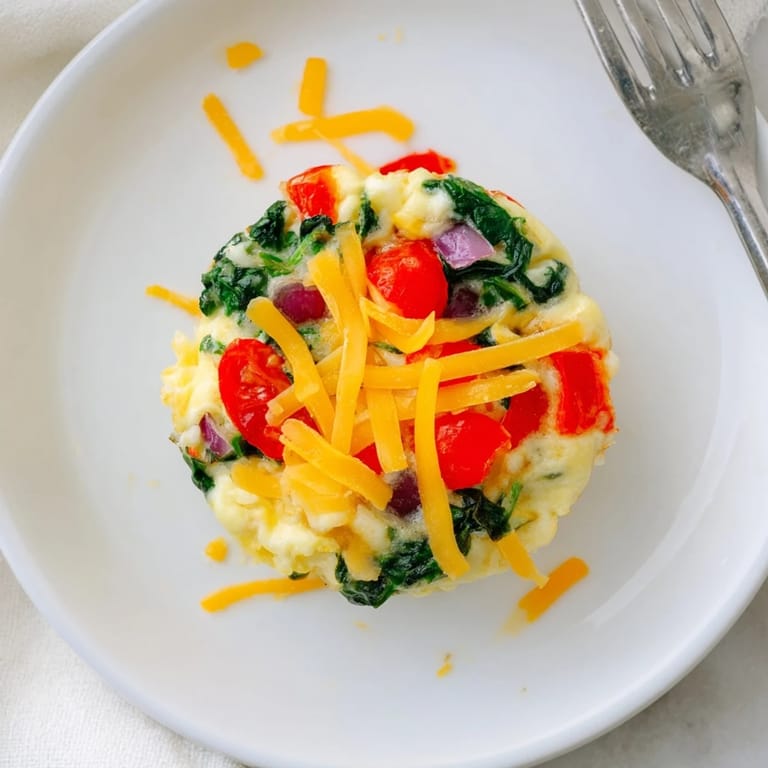
- Add spinach, bell pepper, tomatoes, red onion, and half the cheese, stirring gently so you don't deflate the eggs. The goal is even distribution without breaking things up too much.
- Fill the muffin cups:
- Divide the mixture evenly, filling each cup about three-quarters full—this prevents overflow but gives enough volume to cook through properly.
- Top with cheese:
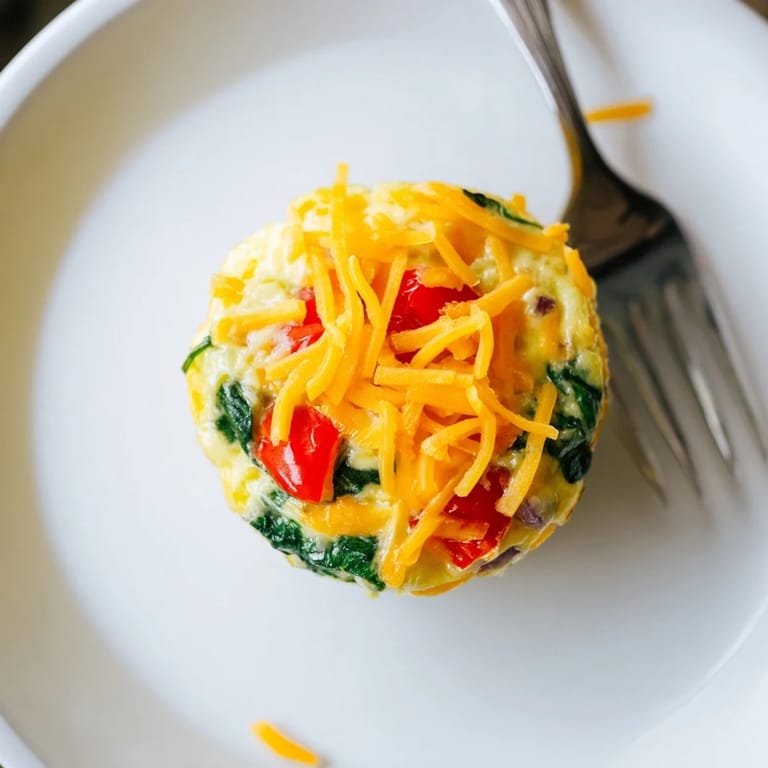
- Sprinkle the remaining cheese on top of each muffin; it'll melt into a golden crust that tastes incredible.
- Bake until set:
- Bake for 18 to 22 minutes—they're done when the edges are lightly golden and the centers jiggle just slightly when you tap the tin. Overbaking makes them rubbery, so check at 18 minutes.
- Cool and remove:
- Let them rest in the tin for a few minutes before popping them out. This gives the structure time to firm up and makes removal clean.
 Merken
 There was a morning when I reheated one of these at my desk, and my coworker asked what smelled so good—turns out, a proper savory breakfast can change the whole vibe of an office kitchen. That's when I realized these weren't just meal prep; they were an upgrade to how I actually lived.
Mix-Ins and Flavor Variations
The beauty of these muffins is how adaptable they are. I've swapped in zucchini, mushrooms, broccoli, and even leftover roasted vegetables with zero complaints. Fresh herbs like chives, parsley, or dill scattered on top add a brightness that surprises you every time. Once I added sun-dried tomatoes and fresh basil on a whim, and they became my go-to version for the whole month.
Storage and Reheating
These keep beautifully in the fridge for up to four days in an airtight container, and freezing them feels like banking breakfast for future chaos. I've learned that freezing them individually on a sheet first, then moving them to a bag, prevents them from sticking together into one sad clump. A quick 30 to 45 seconds in the microwave brings them back to almost-fresh, and you can eat them straight from the fridge if you're in a real rush.
Why These Work for Real Life
Meal prep can feel like a chore, but something about biting into a warm, cheesy egg muffin makes it feel less like obligation and more like you're taking care of yourself. They've made mornings quieter and less frantic in my house, which might sound like a small thing until you realize how much better everything else goes when you actually eat something substantial before 10 a.m.
- Pair them with a piece of fruit or toast if you want more carbs, or eat them plain for pure protein satisfaction.
- Bring them to meetings, road trips, or early workouts—they travel better than almost any breakfast.
- Make a double batch if you're cooking for a family; they disappear faster than you'd think.
 Merken
 These muffins have become the breakfast I actually look forward to, which is saying something. They're proof that meal prep doesn't have to feel like punishment—it can taste like taking care of yourself.
Antworten auf häufige Fragen
- → Welche Gemüsesorten passen gut zu den Ei-Muffins?
Spinat, rote Paprika, Cherrytomaten und Zwiebeln bringen Farbe und Geschmack. Alternativ eignen sich Zucchini, Pilze oder Brokkoli ebenfalls sehr gut.
- → Kann ich pflanzliche Milch und Käse verwenden?
Ja, pflanzliche Milch und vegane Käsealternativen funktionieren problemlos und passen gut zum Gericht.
- → Wie lange sind die Muffins haltbar?
Im Kühlschrank halten sie sich bis zu 4 Tage, eingefroren bis zu 2 Monate. Vor dem Verzehr einfach kurz aufwärmen.
- → Wie gelingt das Backen am besten?
Ofen auf 175°C vorheizen, Muffinförmchen gut einfetten oder mit Silikonförmchen auslegen. Die Mischung zu ¾ füllen und 18-22 Minuten backen, bis sie goldbraun sind.
- → Sind die Muffins glutenfrei und eiweißreich?
Ja, sie sind glutenfrei und liefern dank der Eier und Gemüse eine gute Portion Protein.
- → Kann ich die Kräuter nach Belieben anpassen?
Frische Kräuter wie Schnittlauch, Petersilie oder getrocknete Italienische Kräuter verleihen zusätzlichen Geschmack und lassen sich leicht variieren.